
There’s a particular glow people have the morning after a really good facial. Dewy, bouncy, lit-from-within, like they’ve slept ten hours and drunk their body weight in water. A HydraFacial is how a lot of people get there on a Tuesday lunch break.
It’s a hard-working treatment that combines multiple steps for smoother and more radiant-looking skin. It suits most skin types and most concerns, whether that’s dullness, dehydration or congestion. And most people emerge noticeably brighter, which is exactly why it’s become such a pre-event favourite.

What is a HydraFacial?
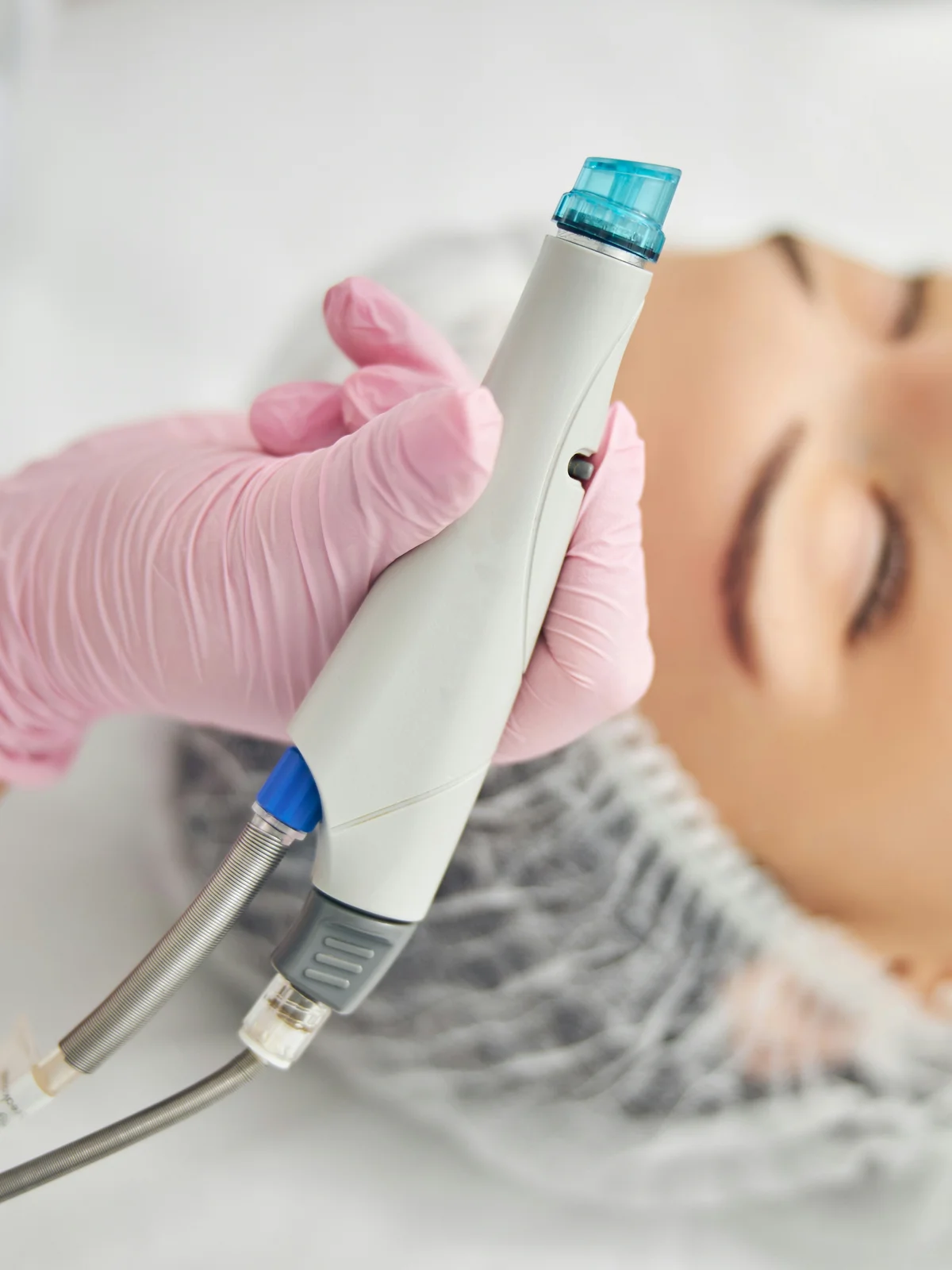
A HydraFacial is a multi-step facial that cleanses, extracts and hydrates your skin in a single session, using a handheld device with a spiralled tip. The device pairs gentle exfoliation with nourishing serums. You get the deep-clean benefits of a clinical treatment, with very little irritation and almost no downtime. Think of it as a proper reset for your skin, minus the angry redness.
How does a HydraFacial actually work?
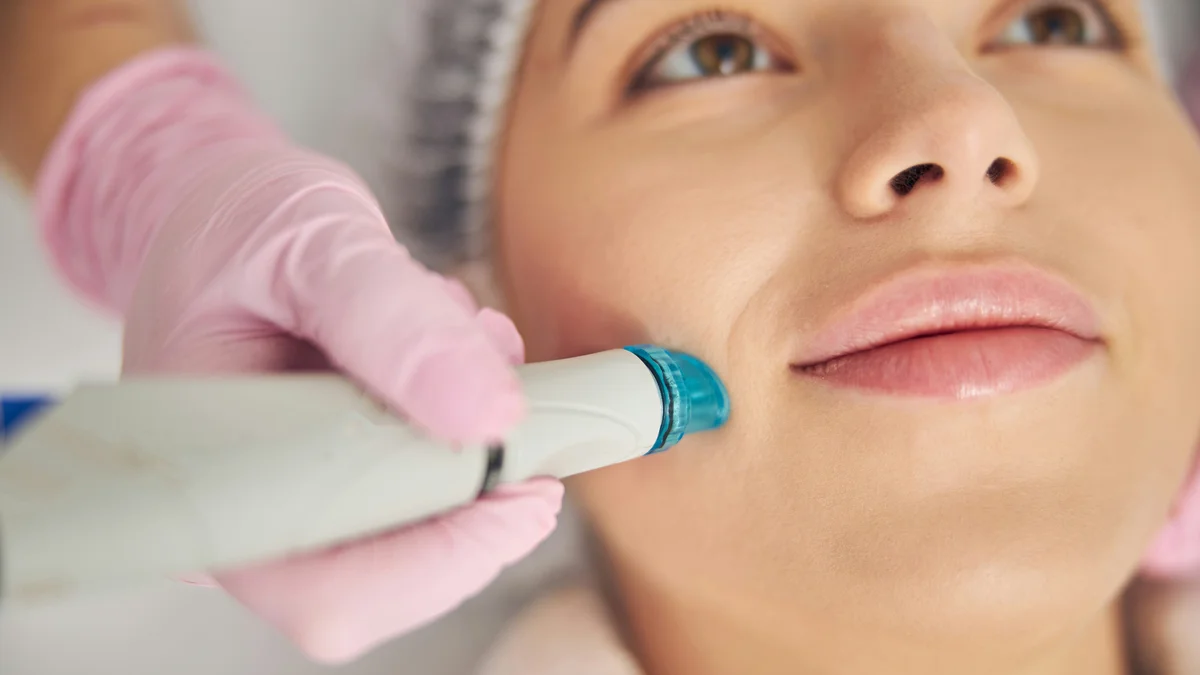
The magic is in the tip. A spiral tip creates a gentle vortex of water and serum. It loosens grime and lifts away dead cells, all while pushing fresh hydration back in.
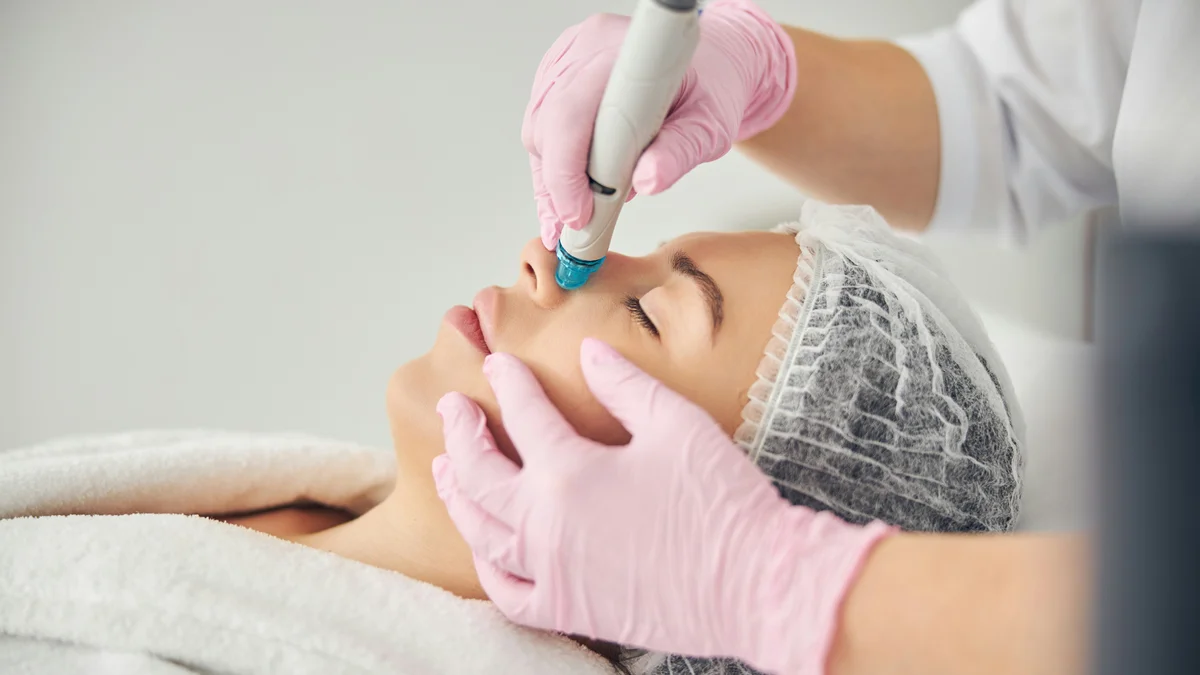
It targets blackheads and congestion without any of the pinching you might brace yourself for. Most people describe it as a tiny vacuum gliding over the face, oddly satisfying rather than painful (we promise).
Who carries out a HydraFacial?
A trained, licensed practitioner carries out your HydraFacial, usually a facialist or skin therapist who’s completed specific certification for the device. Their skill really shows, especially when it comes to choosing the right tip, the optimal serums and dialling the suction up or down to suit you. A good practitioner reads your skin and adjusts as they go.
The HydraFacial process, step by step
A standard HydraFacial runs about 30 to 45 minutes and works in clear stages, each one building on the last. You’ll move from a deep cleanse through to extraction, then finish with a flood of hydration. And you’ll do it without the redness of more invasive treatments. Optional extras like boosters, LED light or lymphatic drainage can be added on if you fancy them. Pro tip: a little prep helps. Ease off strong actives and skip the sunbathing for a day or two beforehand (your skin will thank you).
Cleanse and peel
First, your practitioner clears the decks. A mild glycolic and salicylic acid blend lifts away dead skin cells and preps the surface for extraction. It’s gentle enough that most people feel nothing more than a light tingle, no stinging, no drama.
Extract and hydrate
Next comes the satisfying bit. Controlled suction lifts debris out of your pores while hydrating serums go in at the same time, clarifying and balancing as it works. This is where you’ll see the most dramatic before-and-after, especially if your skin runs congested.
Fuse and protect
Finally, your skin gets its armour. Antioxidants and peptides go on to strengthen and protect, and this is where any targeted booster (for pigmentation or fine lines, say) does its work. Keep your routine gentle for a few days afterwards. Your skin will be extra thirsty, primed to drink in whatever you put on it.

What results can you expect from a HydraFacial?
You can expect an immediately clearer, smoother, brighter complexion, often after a single session. A HydraFacial tackles dullness, dehydration, congestion and early signs of ageing all at once. Plenty of people notice softer-looking fine lines and tighter-looking pores straight away, though the real payoff comes with regular sessions.
Immediate vs long-term results
Straight after, your skin looks dewy, plump and properly hydrated, and that fresh glow tends to last up to a couple of weeks. That’s the whole reason people book one before a wedding or a big night out. Stick with it over time and the deeper wins show up: smoother texture, more even tone, fading patches of pigmentation. It’s a treatment that rewards consistency.

HydraFacial for specific skin concerns
Customisable serums are what let a HydraFacial flex to your skin. Acne-prone skin benefits from salicylic acid to unclog pores and calm things down. If firmness and fine lines are your focus, a peptide-rich booster steps in.
And for dullness or dark spots, such as sun damage and post-breakout marks, a brightening booster works particularly well. There’s no single recipe, which is rather the point.
Is a HydraFacial good for blackheads and acne-prone skin?
Yes, a HydraFacial is one of the better options for blackheads and mild to moderate acne. The vortex extraction draws out impurities with very little irritation, which lowers the risk of the scarring that aggressive squeezing can cause. If you’ve ever endured a facialist going to town on your nose, you’ll appreciate how much gentler this feels.
HydraFacial extraction vs manual extraction
The big difference is force. HydraFacial’s suction lifts debris out gently, which means less trauma and less chance of broken capillaries. Manual extraction still has its place for certain stubborn, deep blemishes. But a HydraFacial gives you a thorough pore clear-out, without leaving you looking like you’ve gone three rounds with your own face.
Who is a HydraFacial good for?
A HydraFacial is safe for most skin types, including sensitive skin and deeper skin tones. It’s especially good for dullness, congestion, dryness and mild signs of ageing. Lots of people book one for an instant glow before a big event. It’s just as valuable as part of a longer-term skin routine.
What about sensitive skin?
Sensitive and reactive skin is usually well looked after with a HydraFacial. Your practitioner can choose gentler serums and tailor the treatment to avoid flare-ups. Patch testing is available too, if you’re trying a new booster. Most people are pleasantly surprised by how calm their skin stays.
When to hold off
Some situations mean a HydraFacial should wait. Hold off if you have an active skin infection, sunburn or have had recent in-clinic skin work. Leave it up to two weeks after injectables and around six months after a course of isotretinoin (a strong oral acne medication). Active rosacea flare-ups and any open wounds also mean it’s best to postpone.
HydraFacial side effects and downtime
Side effects are minimal and downtime is close to zero. A little redness or tightness can crop up, but it usually settles within an hour or two. Longer-lasting reactions are rare and tend to be linked to very sensitive skin or suction that’s been set too high.
Looking after your skin afterwards
Aftercare is simple: be gentle and wear SPF. Your skin will be extra receptive for a few days. That’s lovely for absorbing serums, but it does leave you more vulnerable to UV, so sunscreen is the bit that really matters. Skip harsh exfoliants, retinoids and strong acids for 24 hours, and if you’re prone to sweat-triggered breakouts, leave the intense workout for tomorrow.

When to call your practitioner
Most people never need to, but it helps to know the signs. Call your practitioner if you notice unusual swelling, lingering breakouts or discomfort that won’t shift. Allergic reactions are rare, but ongoing redness, itching or any sign of infection deserves a quick check.
How much does a HydraFacial cost?
A HydraFacial in the Netherlands typically costs around €85 to €155 a session, depending on the salon, the location and any add-ons you choose. City-centre clinics tend to sit at the higher end, while you’ll often find better value a little further out. Premium packages with extra boosters and longer sessions can cost more.
HydraFacial packages explained
Most menus offer a few tiers. An entry-level session covers the essentials (cleanse, extraction and hydration) and it’s a brilliant introduction. A mid-tier session usually adds a booster and LED light therapy for a specific concern, which makes it the popular pick for regulars. A premium session piles on lymphatic drainage, more than one booster and a longer slot for the full works.
How to get the best value
A few easy moves keep the cost down. Memberships and multi-session packages bring the per-session price down noticeably. Seasonal offers and bundled treatments are worth watching for, especially around the New Year and early autumn. Some salons also throw in a complimentary add-on for first-timers, so do ask.

How does a HydraFacial compare to other facials?
A HydraFacial stands out because it combines automated suction and serum infusion in a way most facials simply don’t. A traditional facial leans on manual technique and masks, which can be wonderfully relaxing but the precision and consistency depends on your facialist. A HydraFacial is sometimes paired with a gentle peel or microdermabrasion for an extra boost, though it’s wise to space those out so you’re not overdoing it.
HydraFacial vs diamond-tip facials and microdermabrasion
The main difference is how each one exfoliates. Diamond-tip facials and microdermabrasion use a textured tip to physically buff away the surface. A HydraFacial uses a water-and-serum vortex that exfoliates and hydrates at the same time.
Diamond-tip and microdermabrasion treatments can feel a touch more abrasive. Some people prefer that for stubborn texture, whereas a HydraFacial leans gentler and more hydrating.
When to choose a HydraFacial
Choose a HydraFacial when you want quick, radiant results with barely any downtime, ideal for a packed diary or pre-event prep. If you’re after intense, deep exfoliation and don’t mind it being a bit harsher, microdermabrasion might suit you better, though it’s less forgiving on sensitive skin. A practitioner can help you weigh up any combinations so you don’t overwork your skin barrier.
| Treatment | Technology | Downtime | Pain level | Best for | Results duration |
|---|---|---|---|---|---|
| HydraFacial | Vortex suction with serum infusion | Minimal (0-1 day) | Mild | Brightening, hydration, pore cleansing | About 4-6 weeks |
| Diamond-tip facial | Diamond-tip buffing with serums | Minimal (0-1 day) | Mild to moderate | Manual exfoliation plus serums | About 4 weeks |
| Regular facial | Manual cleansing, masks, exfoliation | None to minimal | Mild | Relaxation, surface-level skincare | Varies |
| Microdermabrasion | Crystal or diamond-tip abrasion | 1-2 days mild redness | Mild to moderate | Deeper exfoliation, texture | About 2-4 weeks |
| Light chemical peel | Mild chemical exfoliants | 3-5 days mild flaking | Mild to moderate | Tone correction, surface pigmentation | About 4 weeks |
HydraFacial boosters and add-ons
Boosters are concentrated serums that let your practitioner tailor a HydraFacial to exactly what your skin needs. They target specific concerns like pigmentation, breakouts, dehydration and fine lines, so no two treatments have to be the same. LED light therapy is another popular add-on: red light supports collagen and blue light helps to tackle the bacteria behind breakouts.
Boosters by skin concern
There’s a booster for most things. A peptide and growth-factor booster supports collagen and cell renewal, targeting firmness and fine lines. A brightening booster helps soften sun damage and even out dark spots, and works particularly well on post-breakout marks. A clarifying booster keeps oil in check and calms breakouts. Plenty of people rotate their booster with the seasons, leaning into hydration over winter and brightening over summer.

How often should you get a HydraFacial?
Most people get a HydraFacial monthly, or every four to six weeks, to keep results ticking over. Your skin renews itself roughly every month, so a monthly treatment lines up neatly with that natural cycle. You can flex it to suit the seasons and how your skin behaves, since some people want more frequent sessions during winter dryness or a sticky summer.
Building your HydraFacial schedule
A good starting point is a short series. Three or four treatments spaced two to three weeks apart kick-starts your results, then you settle into a monthly maintenance rhythm. Back it up with a gentle home routine, daily SPF and a few quality serums, and you’ll stretch the glow further. Use the four-to-six-week guide as a loose framework, but let how your skin actually looks and feels be your real cue.

Now you know how a HydraFacial works, what it costs and how often to book one, the only thing left is the easy part. Picture walking back into your afternoon with that lit-from-within glow, no redness, no recovery, just skin that looks like it’s had a proper holiday. Browse salons near you on Treatwell, read real reviews, compare prices and book a slot that suits, whether that’s this week, this evening or the weekend. What are you waiting for?
FAQs
What is a HydraFacial and how does it work?
It's a multi-step facial that uses a spiral tip and a water-and-serum vortex to cleanse, extract and hydrate in one session. You walk out with clearer, brighter skin and no real downtime.
How much does a HydraFacial cost?
Expect around €85 to €155 a session in the Netherlands, with city-centre clinics at the higher end. Memberships and packages bring the per-session cost down considerably.
Is a HydraFacial good for removing blackheads?
Very. The vortex suction lifts blackheads out without the trauma of manual squeezing, and visible results often show after a single session.
How does a HydraFacial compare to diamond-tip facials and microdermabrasion?
A HydraFacial uses a water-and-serum vortex that exfoliates and hydrates at once, while diamond-tip facials and microdermabrasion physically buff the surface. The HydraFacial tends to feel gentler and more hydrating.
Is there any downtime after a HydraFacial?
Barely any. Most people carry on with their day straight away, perhaps with slight redness for an hour or two, and you can usually apply make-up right after if you need to.
How often should I get a HydraFacial?
Monthly, or every four to six weeks, works for most people. You might start closer together to tackle a specific concern, then space sessions out for maintenance.
Does a HydraFacial help with anti-ageing?
It can, especially with peptide and growth-factor boosters. Regular sessions support elasticity and soften fine lines, though it's not a replacement for stronger treatments like lasers for deeper wrinkles.
Is a HydraFacial really worth it?
For visible results with zero downtime, it's a brilliant choice. Booking during a seasonal offer or as part of a package brings the per-session cost down nicely too.